Welcome

Добро пожаловать к этому международному месту открытки изображения. Benvenuto a questo luogo internazionale della cartolina di immagine. Καλωσορίστε σε αυτήν την διεθνή περιοχή καρτών εικόνων. Willkommen zu diesem internationalen Abbildungspostkarteaufstellungsort. Bienvenue à cet emplacement international de carte postale. Onthaal aan deze Internationale plaats van de beeldprentbriefkaar. Welcome to this International picture postcard site. (Please Click on the Picture for an Enlarged View)

Tuesday, January 07, 2014

Polish uszka, also known as "little ears"

Further to my post on 22nd October 2013, when I talked about Borcht, Elzbieta sent me this card from Poland. This card shows a Traditional Polish borscht with dumplings called "Uszka". 


Polish uszka, also known as "little ears" because of their shape, are one of the three main Polish filled dumplings/crepes along with pierogi and nalesniki. They are typically made with savory fillings and boiled in broth. Mushroom-filled uszka served in beetbarszcz are a favorite for Christmas Eve wigilia dinner.

Thank you Elzbieta for afixing such beautiful stamps on the card. What pretty roses!

Monday, January 06, 2014

Northern Lights in March


Anu sent me this card from Finland. The painting is titled "Northern Lights in March".

Sunday, January 05, 2014


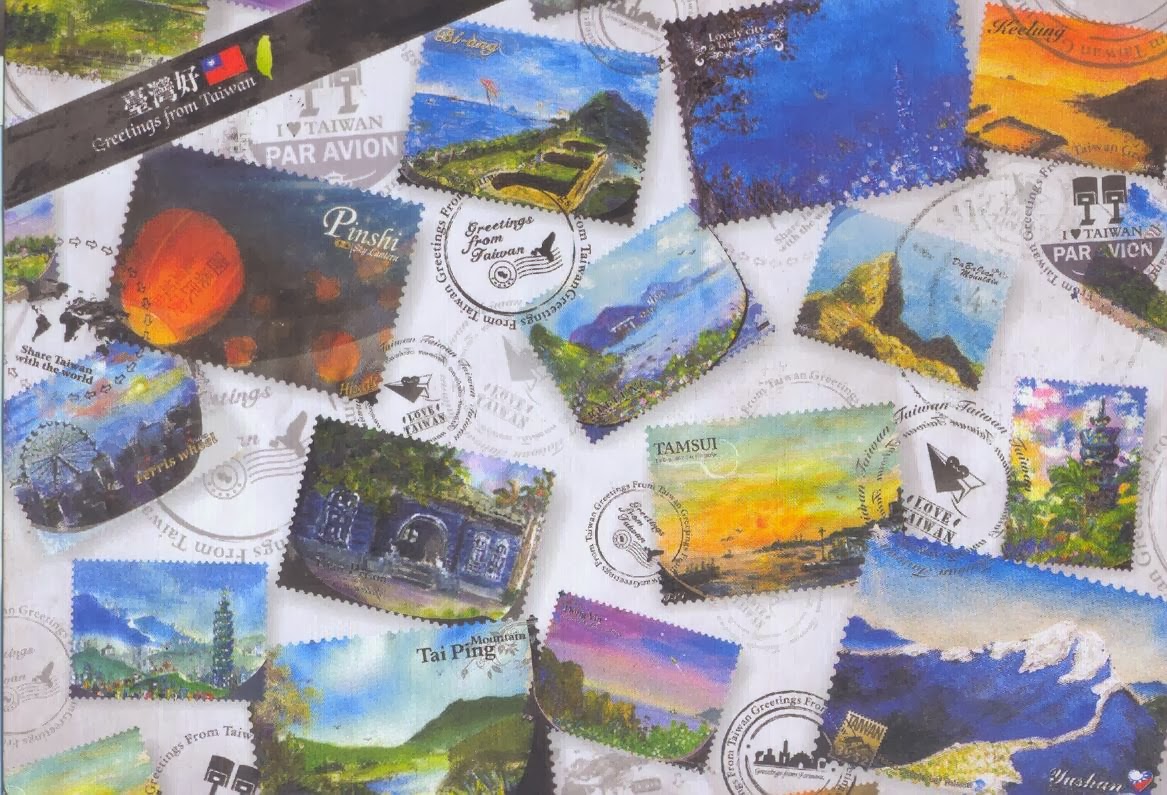
Shuli sent me this pretty post card that displays the wonderful sights in store for tourists visiting Taiwan. Nature has been very kind to this tiny country.

Saturday, January 04, 2014

The Glade Creek Grist Mill

The Glade Creek Grist Mill is a new mill that was completed in 1976 at Babcock.  Fully operable, this mill was built as a re-creation of one which once ground grain on Glade Creek long before Babcock became a state park.  Known as Cooper's Mill, it stood on the present location of the park's administration building parking lot.
Of special interest, the mill was created by combining parts and pieces from three mills which once dotted the state.  The basic structure of the mill came from the Stoney Creek Grist Mill which dates back to 1890.  It was dismantled and moved piece by piece to Babcock from a spot near Campbelltown in Pocahontas County.  After an accidental fire destroyed the Spring Run Grist Mill near Petersburg, Grant County, only the overshot water wheel could be salvaged.  Other parts for the mill came from the Onego Grist Mill near Seneca Rocks in Pendleton County.
A living monument to the over 500 mills which thrived in West Virginia at the turn of the century, the Glade Creek Grist Mill provides freshly ground cornmeal which park guests may purchase depending on availability and stream conditions.  Visitors to the mill may journey back to the time when grinding grain by a rushing stream was a way of life, and the groaning mill wheel was music to the miller's ear.
Thank you Katie for this lovely card.

Thursday, January 02, 2014

SS Prince August Wilhelm

A card from the Postcard book of "Steamboats" showing a poster advertising the passenger steamer "Prince August Wilhelm" of the Hamburg-America Line (4733 GRT, 856 passengers, 116 crew). 

The ship’s maiden trip was to Mexico in 1903. Interned in Colombia in 1914, she was destroyed in a fire, mainly due to the effects of war in Colombia in 1918. 

The artist has tried to give the painting a pleasing tropical flavour with sugar cane plants.


Thank you Klaus for this nice card.

Thursday, December 26, 2013

Centenary of the Opening of traffic on the Valga-Moniste-Gulbene-Pjavinas narrow gauge railway in 1900.

The history of rail transport in Estonia starts in 1870 when a line was opened connecting Paldiski, Tallinn, Tapa and Narva; the line extending all the way to St. Petersburg in Russia.

Ella sent me this card which was issued to commemorate the Centenary of the Opening of traffic on the Valga-Moniste-Gulbene-Pjavinas narrow gauge railway in 1900.

Wednesday, December 25, 2013

The Estonian Maritime Museum's Seaplane Harbour

The Estonian Maritime Museum's Seaplane Harbour was named as a nominee for the European Museum of the Year Award (EMYA) 2014. 

The Seaplane Harbour of the Estonian Maritime Museum was opened in May 2012 and has had more than 550,000 visitors since. In 2014, the steam-powered icebreaker Suur Tõll will celebrate her 100th birthday. For that occasion, she will be renovated and a new exhibition describing her history will be prepared. The icebreaker will be reopened to the public on 19 June 2014.
With the help of modern multimedia, the Seaplane Harbour in the wooden architecture suburb Kalamaja tells exciting stories about the Estonian maritime and military history promising a “sea full of excitement” for the whole family on an area that would take nearly 2 million A4 paper sheets laid down side by side. The museum’s display, that comprises of more than a couple of hundred large exhibits, revitalizes the colourful history of Estonia.

British built submarine Lembit weighing 600 tones is the centrepiece of the new museum. Built in 1936 for the Estonian navy, Lembit served in the World War II under the Soviet flag. It remained in service for 75 years being the oldest submarine in the World still in use until it was hauled ashore in 2011. Despite its long history, Lembit is still in an excellent condition offering a glimpse of the 1930s art of technology.

Another exciting attraction is a full-scale replica of Short Type 184, a British pre-World War II seaplane, which was also used by the Estonian armed forces. Short Type 184 has earned its place in military history by being the first aircraft ever to attack an enemy’s ship with an air-launched torpedo. Since none of the original seaplanes have survived, the replica in Seaplane Harbour is the only full-size representation of the aircraft in the whole World.

Simulators mimicking a flight above Tallinn, around-the-world journey in the yellow submarine, navigating on the Tallinn bay make this museum heaven for kids or adventurous adults.  

Seaplane Harbour operates in architecturally unique hangars built almost a century ago, in 1916 and 1917, as a part of Peter the Great sea fortress. These hangars are the World’s first reinforced concrete shell structures of such a great size. Charles Lindbergh, the man who performed the first solo flight across the Atlantic Ocean, landed here in 1930s. In 2012 the hangars were rewarded with best concrete building of the year title.  

On the outdoor area visitors can tour a collection of historic ships, including the Suur Tõll, Europe's largest steam-powered icebreaker.

Thank you Ella.