Welcome

Добро пожаловать к этому международному месту открытки изображения. Benvenuto a questo luogo internazionale della cartolina di immagine. Καλωσορίστε σε αυτήν την διεθνή περιοχή καρτών εικόνων. Willkommen zu diesem internationalen Abbildungspostkarteaufstellungsort. Bienvenue à cet emplacement international de carte postale. Onthaal aan deze Internationale plaats van de beeldprentbriefkaar. Welcome to this International picture postcard site. (Please Click on the Picture for an Enlarged View)

Saturday, January 11, 2014

Greetings from Munster

Christine sends her season’s greetings from Münster, which is an independent city in North Rhine-Westphalia, Germany. It is in the northern part of the state and is considered to be the cultural centre of theWestphalia region. It is also capital of the local government region Münsterland. Münster was the location of the Anabaptist rebellion during theProtestant Reformation and the site of the signing of the Treaty of Westphalia ending the Thirty Years' War in 1648. Today it is known as the bicycle capital of Germany.
Münster gained the status of a Großstadt (major city) with more than 100,000 inhabitants in 1915. Currently there are around 270,000 people living in the city, with about 48,500 students, only some of whom are recorded in the official population statistics as having their primary residence in Münster.

Thursday, January 09, 2014

Chatterbox - a godsend for the Enemy

Kostya and Maya sent me this card from Russia which shows an old Soviet poster informing the public in general about the dangers from spies listening to their loose and careless talk. The card announces this with the words - Chatterbox - a godsend for the Enemy

Wednesday, January 08, 2014

The American Drama Group Europe performed “A Christmas Carol” by Charles Dickens in a Münich Theater recently. Sophia from the South of Germany sent me this lovely card. 

A Christmas Carol by Charles Dickens - simply to say this simple phrase brings a smile to most people's face and why not? It might be the best short story ever written, or the best loved, or the best known or the most enjoyable, it certainly has to be performed as Dickens himself knew. It's December and we must have our pudding, our parsnips and our Christmas Carol. The story actually created our modern idea of Christmas, it influences Christmas, it is part of Christmas and it reminds us that there is more to Christmas than a shopping and eating festival. 


The story is enormous fun but it is also surprisingly serious. Dickens warns that unless despair and poverty are banished from London the City will burn in flames. 

Scrooge is frightened half to death and Marley is forever damned. Any director or dramatist who turns their hand to this most famous story will soon have to confront this problem: how to do justice to Dickens rather serious themes and still provide the Christmas feast of laughter and joy that the public want, even demand! All we can do is take you down the alleys that Dickens travelled, through a London that defined modern life because it was the first megalopolis, an urban nightmare where the very air was unfit to breathe. (The famous London fog was simply smoke). The wealthiest city in the world was the city with the most poor in the world. This was a contrast that Dickens dedicated much of his life and work to exposing. Today the truly poor have been banished to the Third World, London and its like are more comfortable places in which to live but we would do well to remember the message of A CHRISTMAS CAROL: that the Christmas Spirit is joyful because it shares its joy and its feast with others, especially the poor. The play is for them and for you. 

Tuesday, January 07, 2014

Polish uszka, also known as "little ears"

Further to my post on 22nd October 2013, when I talked about Borcht, Elzbieta sent me this card from Poland. This card shows a Traditional Polish borscht with dumplings called "Uszka". 


Polish uszka, also known as "little ears" because of their shape, are one of the three main Polish filled dumplings/crepes along with pierogi and nalesniki. They are typically made with savory fillings and boiled in broth. Mushroom-filled uszka served in beetbarszcz are a favorite for Christmas Eve wigilia dinner.

Thank you Elzbieta for afixing such beautiful stamps on the card. What pretty roses!

Monday, January 06, 2014

Northern Lights in March


Anu sent me this card from Finland. The painting is titled "Northern Lights in March".

Sunday, January 05, 2014


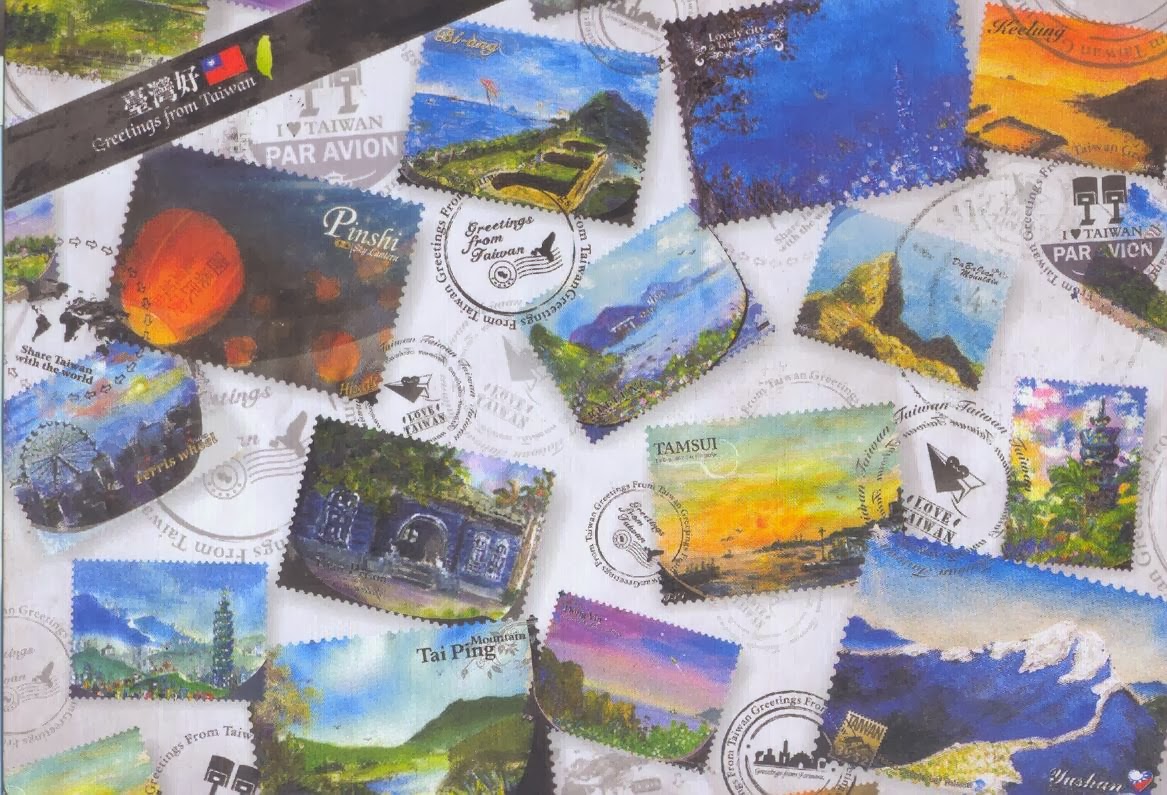
Shuli sent me this pretty post card that displays the wonderful sights in store for tourists visiting Taiwan. Nature has been very kind to this tiny country.

Saturday, January 04, 2014

The Glade Creek Grist Mill

The Glade Creek Grist Mill is a new mill that was completed in 1976 at Babcock.  Fully operable, this mill was built as a re-creation of one which once ground grain on Glade Creek long before Babcock became a state park.  Known as Cooper's Mill, it stood on the present location of the park's administration building parking lot.
Of special interest, the mill was created by combining parts and pieces from three mills which once dotted the state.  The basic structure of the mill came from the Stoney Creek Grist Mill which dates back to 1890.  It was dismantled and moved piece by piece to Babcock from a spot near Campbelltown in Pocahontas County.  After an accidental fire destroyed the Spring Run Grist Mill near Petersburg, Grant County, only the overshot water wheel could be salvaged.  Other parts for the mill came from the Onego Grist Mill near Seneca Rocks in Pendleton County.
A living monument to the over 500 mills which thrived in West Virginia at the turn of the century, the Glade Creek Grist Mill provides freshly ground cornmeal which park guests may purchase depending on availability and stream conditions.  Visitors to the mill may journey back to the time when grinding grain by a rushing stream was a way of life, and the groaning mill wheel was music to the miller's ear.
Thank you Katie for this lovely card.