This blog is for sharing my picture postcards received from time to time with folks who may be similarly interested. Please also see my stamps and first day covers blog www.letstalkstamps.blogspot.com
Welcome
Добро пожаловать к этому международному месту открытки изображения.
Benvenuto a questo luogo internazionale della cartolina di immagine.
Καλωσορίστε σε αυτήν την διεθνή περιοχή καρτών εικόνων.
Willkommen zu diesem internationalen Abbildungspostkarteaufstellungsort.
Bienvenue à cet emplacement international de carte postale.
Onthaal aan deze Internationale plaats van de beeldprentbriefkaar.
Welcome to this International picture postcard site.
(Please Click on the Picture for an Enlarged View)
Monday, July 30, 2012
Sunday, July 29, 2012
Bengtskär Lighthouse
Bengtskär lighthouse is located in the Archipelago Sea about 25 kilometres south west of Hanko, Finland. The lighthouse was built in 1906 on the Bengtskär skerry where it rises 52 meters above sea level and is the highest one in the Nordic countries. This rocky skerry is the southernmost inhabited place in Finland, and is reached by ferry from the village of Kasnäs. Soviet troops landing there tried to explode the lighthouse during the Battle of Bengtskär during the Continuation War in 1941. Bengtskär lighthouse is nowadays a popular tourist destination and is visited roughly 13 000 to 15 000 tourists every year.
When the lighthouse was completed in 1907, a five-man crew was hired to live on the island: a lighthouse master, three lighthouse keepers and a foghorn operator. They lived on the island with their families for several years and seldom visited the mainland. The families were nearly self-sufficient: they had sheep, pigs and a small vegetable garden. Sometimes, during autumn storms, waves would wash over the whole island, sweeping away the valuable garden. Thank you Merja for this pretty card.
Saturday, July 28, 2012
Royal Tunbridge Wells
(usually shortened to Tunbridge Wells) is a large town and Borough in
west Kent, England, about 40 miles (64 km) south-east of central London by
road, 34.5 miles (55.5 km) by rail. The town is close to the border of the
county of East Sussex. It is situated at the northern edge of the High Weald,
the sandstone geology of which is exemplified by the rock formations at the
Wellington Rocks and High Rocks. The town came into being as a spa in Georgian
times and had its heyday as a tourist resort under Richard (Beau) Nash when the
Pantiles and its chalybeate spring attracted visitors who wished to take the
waters. Though its popularity waned with the advent of sea bathing, the town
remains popular and derives some 30% of its income from the tourist industry.
The town has a population of around 56,500 and is the
administrative centre of Tunbridge Wells Borough and the UK parliamentary
constituency of Tunbridge Wells. In the United Kingdom Tunbridge Wells has a
reputation as being the archetypal conservative "Middle England"
town, a stereotype that is typified by the fictional letter-writer "Disgusted
of Tunbridge Wells" ;-))
One of the stamps on the card about Royal
Tunbridge Wells sent to me by Debbie
depicts My Favourite Charles
Dickens character: Mr Pickwick from The Pickwick Papers (1836). And I just could not resist including him in my
blog.
“There are very few moments in a man’s existence, when he
experiences so much ludicrous distress, or meets with so little charitable
commiseration, as when he is in pursuit of his own hat.” Yet there are few of
Dickens’s characters to whom we feel as charitable as we do towards Mr Pickwick
– especially near the start of The Pickwick Papers, when his hat flies
away as “merrily as a lively porpoise in a strong tide”. “I thought of Mr
Pickwick, and wrote the first number,” said Dickens. Part Falstaff, part
Bertie Wooster, Mr Pickwick embodies the conviviality, lively appetite and
good humour that is an enduring part of an Englishman’s self-image. When the
rotund, bespectacled gentleman first appeared in 1836 the public immediately
fell in love with him, and his creator. Even now you find Pickwick clubs and
Pickwick pubs all over England; and the old Dickens £10 note was not illustrated
by something from Oliver Twist or A Christmas Carol but with The
Pickwick Papers’s cricket match between Dingley Dell and All Muggleton.
(Then again you wouldn’t have wanted Fagin or Scrooge anywhere near your cash.)
His adventures turn slightly sour when one Mrs Bardell sues him for reneging on his offer of marriage. Needless to say, Mr Pickwick had no idea he had made such a promise, but he still ends up in debtors’ prison. When a deranged man steals his nightcap, he defends himself and then, in Dickens’s words, “communicated a revolving motion to his clenched fists, by way of appalling his antagonists with a display of science.” So ludicrous does he appear that his opponent bursts into laughter. Dickens’s advice to anyone who loses his hat could be the motto for Mr Pickwick and, indeed, for us all: while others laugh, keep “smiling pleasantly all the time, as if you thought it as good a joke as anybody else”.Royal Tunbridge Wells (usually shortened to Tunbridge Wells) is a large town and Borough in west Kent, England, about 40 miles (64 km) south-east of central London by road, 34.5 miles (55.5 km) by rail. The town is close to the border of the county of East Sussex. It is situated at the northern edge of the High Weald, the sandstone geology of which is exemplified by the rock formations at the Wellington Rocks and High Rocks. The town came into being as a spa in Georgian times and had its heyday as a tourist resort under Richard (Beau) Nash when the Pantiles and its chalybeate spring attracted visitors who wished to take the waters. Though its popularity waned with the advent of sea bathing, the town remains popular and derives some 30% of its income from the tourist industry.
The town has a population of around 56,500 and is the administrative centre of Tunbridge Wells Borough and the UK parliamentary constituency of Tunbridge Wells. In the United Kingdom Tunbridge Wells has a reputation as being the archetypal conservative "Middle England" town, a stereotype that is typified by the fictional letter-writer "Disgusted of Tunbridge Wells" ;-))
One of the stamps on the card about Royal
Tunbridge Wells sent to me by Debbie
depicts My Favourite Charles
Dickens character: Mr Pickwick from The Pickwick Papers (1836). And I just could not resist including him in my
blog.
“There are very few moments in a man’s existence, when he
experiences so much ludicrous distress, or meets with so little charitable
commiseration, as when he is in pursuit of his own hat.” Yet there are few of
Dickens’s characters to whom we feel as charitable as we do towards Mr Pickwick
– especially near the start of The Pickwick Papers, when his hat flies
away as “merrily as a lively porpoise in a strong tide”. “I thought of Mr
Pickwick, and wrote the first number,” said Dickens. Part Falstaff, part
Bertie Wooster, Mr Pickwick embodies the conviviality, lively appetite and
good humour that is an enduring part of an Englishman’s self-image. When the
rotund, bespectacled gentleman first appeared in 1836 the public immediately
fell in love with him, and his creator. Even now you find Pickwick clubs and
Pickwick pubs all over England; and the old Dickens £10 note was not illustrated
by something from Oliver Twist or A Christmas Carol but with The
Pickwick Papers’s cricket match between Dingley Dell and All Muggleton.
(Then again you wouldn’t have wanted Fagin or Scrooge anywhere near your cash.)
His adventures turn slightly sour when one Mrs Bardell sues him for reneging on his offer of marriage. Needless to say, Mr Pickwick had no idea he had made such a promise, but he still ends up in debtors’ prison. When a deranged man steals his nightcap, he defends himself and then, in Dickens’s words, “communicated a revolving motion to his clenched fists, by way of appalling his antagonists with a display of science.” So ludicrous does he appear that his opponent bursts into laughter. Dickens’s advice to anyone who loses his hat could be the motto for Mr Pickwick and, indeed, for us all: while others laugh, keep “smiling pleasantly all the time, as if you thought it as good a joke as anybody else”.Royal Tunbridge Wells (usually shortened to Tunbridge Wells) is a large town and Borough in west Kent, England, about 40 miles (64 km) south-east of central London by road, 34.5 miles (55.5 km) by rail. The town is close to the border of the county of East Sussex. It is situated at the northern edge of the High Weald, the sandstone geology of which is exemplified by the rock formations at the Wellington Rocks and High Rocks. The town came into being as a spa in Georgian times and had its heyday as a tourist resort under Richard (Beau) Nash when the Pantiles and its chalybeate spring attracted visitors who wished to take the waters. Though its popularity waned with the advent of sea bathing, the town remains popular and derives some 30% of its income from the tourist industry.
The town has a population of around 56,500 and is the administrative centre of Tunbridge Wells Borough and the UK parliamentary constituency of Tunbridge Wells. In the United Kingdom Tunbridge Wells has a reputation as being the archetypal conservative "Middle England" town, a stereotype that is typified by the fictional letter-writer "Disgusted of Tunbridge Wells" ;-))
One of the stamps on the card about Royal
Tunbridge Wells sent to me by Debbie
depicts My Favourite Charles
Dickens character: Mr Pickwick from The Pickwick Papers (1836). And I just could not resist including him in my
blog.
“There are very few moments in a man’s existence, when he
experiences so much ludicrous distress, or meets with so little charitable
commiseration, as when he is in pursuit of his own hat.” Yet there are few of
Dickens’s characters to whom we feel as charitable as we do towards Mr Pickwick
– especially near the start of The Pickwick Papers, when his hat flies
away as “merrily as a lively porpoise in a strong tide”. “I thought of Mr
Pickwick, and wrote the first number,” said Dickens. Part Falstaff, part
Bertie Wooster, Mr Pickwick embodies the conviviality, lively appetite and
good humour that is an enduring part of an Englishman’s self-image. When the
rotund, bespectacled gentleman first appeared in 1836 the public immediately
fell in love with him, and his creator. Even now you find Pickwick clubs and
Pickwick pubs all over England; and the old Dickens £10 note was not illustrated
by something from Oliver Twist or A Christmas Carol but with The
Pickwick Papers’s cricket match between Dingley Dell and All Muggleton.
(Then again you wouldn’t have wanted Fagin or Scrooge anywhere near your cash.)
His adventures turn slightly sour when one Mrs Bardell sues him for reneging on his offer of marriage. Needless to say, Mr Pickwick had no idea he had made such a promise, but he still ends up in debtors’ prison. When a deranged man steals his nightcap, he defends himself and then, in Dickens’s words, “communicated a revolving motion to his clenched fists, by way of appalling his antagonists with a display of science.” So ludicrous does he appear that his opponent bursts into laughter. Dickens’s advice to anyone who loses his hat could be the motto for Mr Pickwick and, indeed, for us all: while others laugh, keep
Friday, July 27, 2012
Weather in Finland - Four distinctly different seasons!
Finland is a country of contrasts, not just in a
geographical sense but also in its climate. The country has four distinctly
different seasons that transform the white winter wonderland to a green leafy
summer in just a few months. Temperatures during the year vary considerably and
-30C in winter and +30C in summer are not uncommon! And this is exactly what
this card sent to me Britta from Raseburg in Southern Finland is trying to depict.
Summer– warm and fair, rain ample, nature green. Summer in Finland
roughly lasts from June to August. The summer is the season of the Midnight Sun
and nights are bright. In Lapland, for two months from June to July, the sun
never sets! Even elsewhere in the country the sun only disappears below the
horizon for a few hours. Summers in Finland are generally warm and in
fact, the average temperatures are higher than those in the UK. Temperatures
tend to stay around +15C-+25C, but temperatures of +30C are not unheard of.
Winter– snowy in the north; Northern Lights shine through Lapland nights. Winter in Finland lasts
roughly from December to March, but the snowfall in Lapland might start as
early as October and last till mid-May. The crisp winter days invite you to
admire the beautiful frozen trees and lakes, whereas if you feel more
energetic, there are thrilling activities such as snowmobiling, husky and
reindeer safaris to try. The clear, dark nights are ideal for spotting the
Northern Lights.
Autumn– forests aglow with tinted foliage. Autumn months September to
November see Finland's forest landscape turn into a splendid and unforgettable
array of red and gold known as "ruska". This is the season when it
rains the most and when the nature starts preparing for a new snowfall in the
forthcoming winter. Temperatures start dropping and might start dipping
below the zero during the nights. In daytime, temperatures hover around +5C to
+15C. The moderate temperatures of autumn make this season ideal for cycling or
hiking along the many woodland trails, while it is also popular to pick newly
appeared wild blueberries, raspberries, lingonberries, cloudberries and
mushrooms, that all make a large part of a Finnish diet. Days again start
getting shorter and nights darker.
Spring– brings in the thaw. Spring months April and May bring Finland much welcomed
light and warmer temperatures. Days are quickly starting to get longer and the
snow starts melting in the South, Western Lakes and Lakeland mid-April, while
in the northern Lapland the snow might well not start melting before May. The
further North you will go, the later the spring arrives.
Lapland alone keeps its vernal snow for winter sport
Thursday, July 26, 2012
Conservation & Protection of Nature
Conservation
is an ethic of resource use, allocation, and protection. Its primary
focus is upon maintaining the health of the natural world its, fisheries,
habitats, and biological diversity. Secondary focus is on materials
conservation and energy conservation, which are seen as important to protect
the natural world. Those who follow the conservation ethic and, especially,
those who advocate or work toward conservation goals are termed
conservationists.
The conservation movement, also known as nature
conservation, is a political, environmental and a social movement that
seeks to protect natural resources including animal, fungus and plant species
as well as their habitat for the future. The early conservation movement included
fisheries and wildlife management, water, soil conservation and sustainable
forestry. The contemporary conservation movement has broadened from the early
movement's emphasis on use of sustainable yield of natural resources and
preservation of wilderness areas to include preservation of biodiversity. Some
say the conservation movement is part of the broader and more far-reaching
environmental movement, while others argue that they differ both in ideology
and practice. Chiefly in the United States, conservation is seen as
differing from environmentalism in that it aims to preserve natural resources
expressly for their continued sustainable use by humans. In other parts of
the world conservation is used more broadly to include the setting aside of
natural areas and the active protection of wildlife for their inherent value,
as much as for any value they may have for humans.
The
United Nations Postal Services issued a stamp on 19th November
1982, which is shown on this maxicard with the special postmark of that
day. Merja gave me this card.
Wednesday, July 25, 2012
Welcome to Loviisa
Pia sent me this card from Loviisa, which is a municipality and town of around 16000 inhabitants (31 January 2012) on the southern coast of Finland. The town centre is located about 87 km east of Helsinki, along the road to St. Petersburg. The new City of Loviisa (Lovisa in Swedish) was born on January 1st 2010 when former municipalities of Loviisa, Liljendal, Pernaja and Ruotsinpyhtää were merged together. Loviisa is best known for its fortifications, the wooden houses in its Old Town and the Strömfors Iron Works. Both Finnish and Swedish (the two official languages of Finland) are traditionally spoken in the Loviisa area.
Loviisa was founded in 1745, as a border fortress against Russia. Most of the fortifications have been preserved. It is named after Lovisa Ulrika, the Swedish Queen consort of Adolf Frederick of Sweden. Loviisa is the site of one of Finland's two nuclear power stations, the other being at Olkiluoto.
Tuesday, July 24, 2012
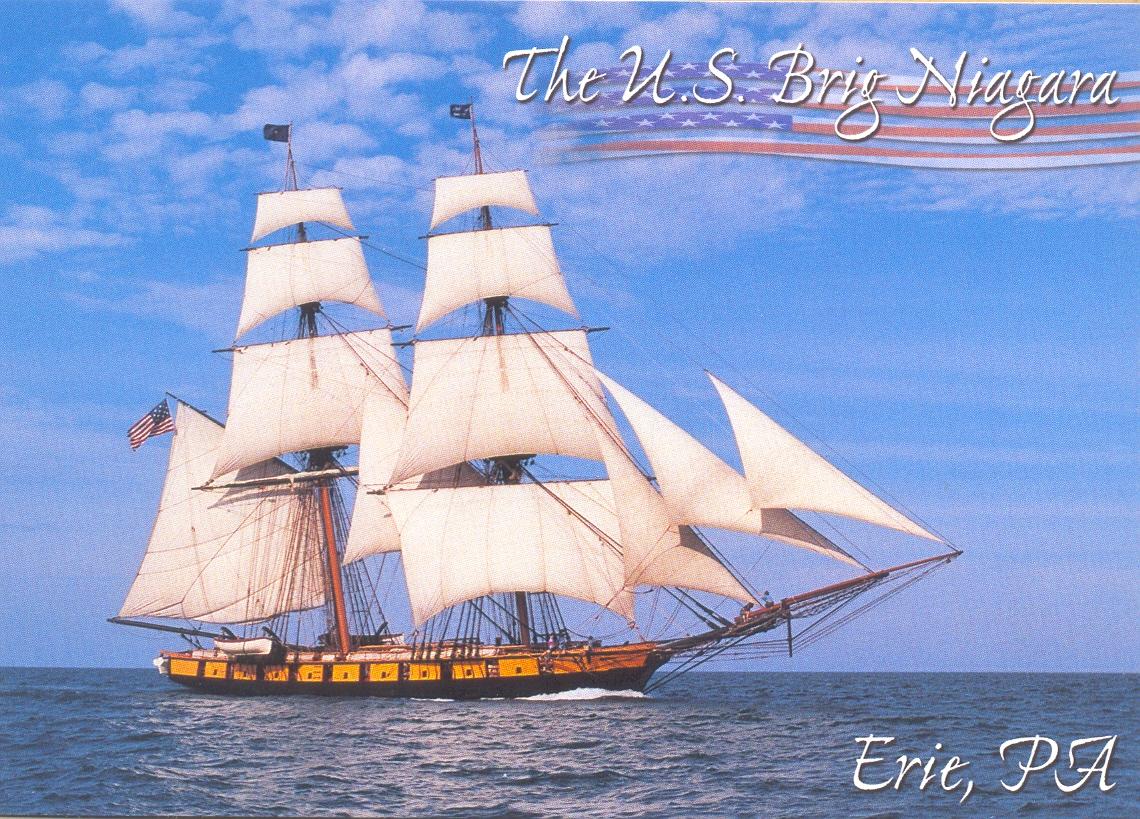
US Brig Niagara
US Brig Niagara or the Flagship Niagara, is a wooden-hulled brig that
served as the relief flagship for Oliver Hazard Perry in the Battle
of Lake Erie during the War of 1812. It is one of last remaining ships from
the War of 1812. The Niagara is usually docked behind the Erie
Maritime Museum in downtown Erie in the U.S. state of Pennsylvania as an
outdoor exhibit for the museum, but travels the Great Lakes during the summer,
serving as an ambassador of Pennsylvania when not docked. It was listed
on the National Register of Historic Places in 1973 and was designated
the official state ship of Pennsylvania by the Pennsylvania General Assembly in
1988. This lovely card was sent to me by Maria.
Subscribe to:
Posts (Atom)