Welcome

Добро пожаловать к этому международному месту открытки изображения. Benvenuto a questo luogo internazionale della cartolina di immagine. Καλωσορίστε σε αυτήν την διεθνή περιοχή καρτών εικόνων. Willkommen zu diesem internationalen Abbildungspostkarteaufstellungsort. Bienvenue à cet emplacement international de carte postale. Onthaal aan deze Internationale plaats van de beeldprentbriefkaar. Welcome to this International picture postcard site. (Please Click on the Picture for an Enlarged View)

Saturday, March 05, 2011

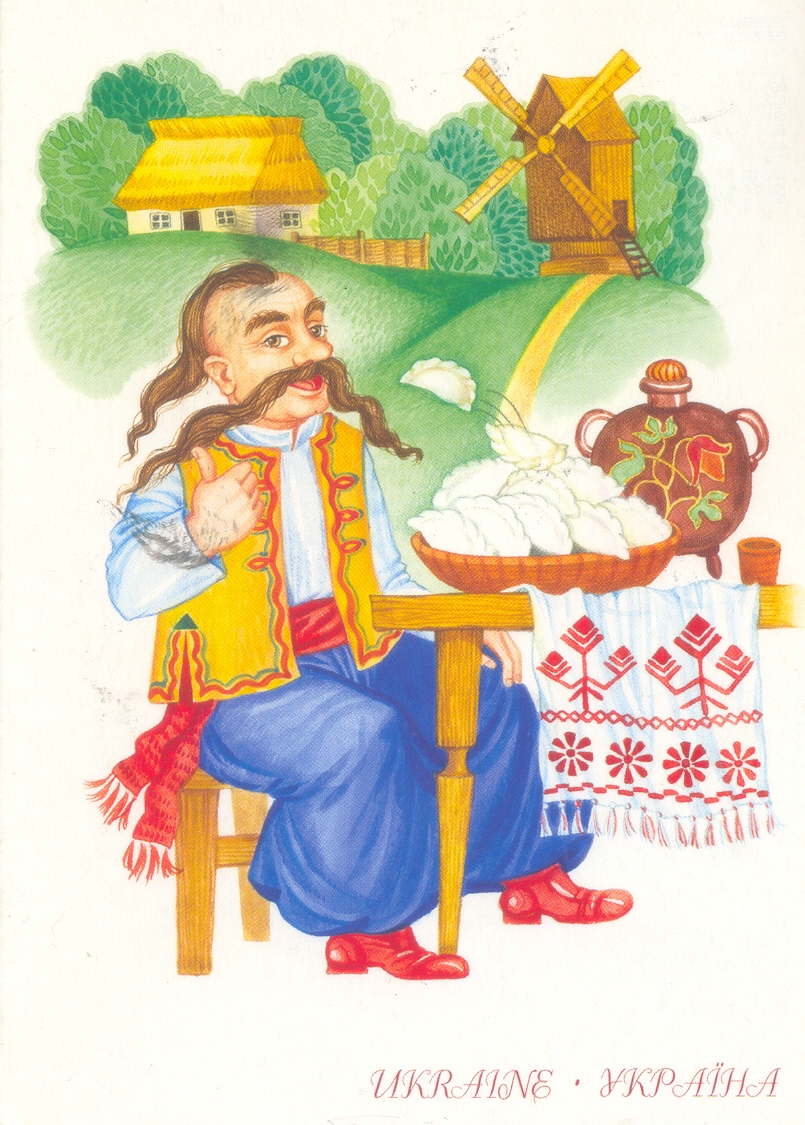
Ukraine – Varenyky


Varenyky or pierogi (Canadian Ukrainian), are a kind of stuffed dumpling associated with Ukrainian cuisine. Some variants are also found in Moldovan, Mennonite, Belarusian, Russian, Lithuanian, and Polish cooking. Varenyky are believed to originate from Chinese and Siberian influences, although sometimes they are said to be of Turkish origin. Varenyky are similar to Polish pierogi. Varenyky are square- or crescent-shaped dumplings of unleavened dough, stuffed with sauerkraut, cheese, mashed potatoes, cabbage, meat, hard-boiled eggs (a Mennonite tradition) or a combination of these, or with a fruit filling. Varenyky are very popular in Ukraine. This attractive card was sent to me by Roma.

Friday, March 04, 2011

China – Jinan University

Jinan University is a leading research and comprehensive university based in Guangzhou, Guangdong province, China. It is one of the oldest universities established on mainland China tracing back to the Qing Empire. It is a university administered by the Overseas Chinese Affairs Office of the State Council and the Chinese Ministry of Education. The name "Ji-Nan" (also Chi-Nan "reaching southward") comes from 'The Classic of History' which is a compilation of documentary records related to events in ancient history of China. The articles reads, "His speech and teachings spread from north to south, until they reached the four corners of the world." Thus the name "Jinan" conveys the school's mission: to spread Chinese culture and learning from North to South, from China to the rest of the world. Gong Yudie sent me this nice maxi card

Thursday, March 03, 2011

Cyprus – Gourri Village

Merja wanted me to see this quaint village of Gourri in the Troodos Area. It is a populated place in Nicosia, Cyprus. The name comes from a medieval aristocratic family called Gourri. Their coat of arms, a sun displayed, is found in several places in the island. One of the members of the family was Jacques du Gourri, viconte of Cyprus. The Church is dedicated to Saint George and it was built in 1775.

Wednesday, March 02, 2011

China - Kaiping

Kaiping or Hoi Ping is a county-level city in Guangdong Province, southern China. It has a population of 680,000 as of 2003 and an area of 1,659 km². The locals speak a variation of the Taishan dialect. Kaiping has traditionally been a region of major emigration abroad, and a melting pot of ideas and trends brought back by overseas Chinese made good. As a consequence, several watchtowers incorporate architectural features from China and the West. As a result, a large number of early Chinese Canadian and Chinese American communities had people who originated from Kaiping and its neighbouring counties of Taishan, Enping and Xinhui. It is said that there are more Kaipingnese people living abroad today than there are Kaipingnese in Kaiping. My friend Gong Yudie sent me this nice maxi card in a beautiful cover with a nice minisheet and pretty stamps on it as displayed.

Tuesday, March 01, 2011

Cyprus – Kato Paphos

Paphos sometimes referred to as Pafos, is a coastal city in the southwest of Cyprus and the capital of Paphos District. In antiquity, two locations were called Paphos: Old Paphos and New Paphos. The currently inhabited city is New Paphos. It lies on the Mediterranean coast, about 50 km (31.07 mi) west of the Limassol (the biggest port in island), which has a A6 highway connection. Paphos International Airport is the country's second largest airport. Near Palaepaphos (Old Paphos) at the seaside of Petra-tou-Romiou is the mythical birthplace of Aphrodite, the Greek goddess of love and beauty and the founding myth is interwoven with the goddess at every level, so that Old Paphos became the most famous and important place for worshipping Aphrodite in the ancient world. In Greco-Roman times Paphos was the island's capital, and it is famous for the remains of the Roman governor's palace, where extensive, fine mosaics are a major tourist attraction. The apostle Paul of Tarsus visited the town during the 1st century AD. The town of Paphos is included in the official UNESCO list of cultural and natural treasures of the world's heritage. Paphos enjoys a Subtropical-Mediterranean climate, with the mildest temperatures on the island. The typical summer's season lasts about 8 months, from April to November, although also in March and December sometimes there are temperature above 20 °C (68.0 °F). My dear friend Merja sent this card.

Monday, February 28, 2011

Finland - Lapland


A reindeer from Finnish Lapland or shoud I say Santa Clausland? Thank you Taru for this nice card.

Friday, February 25, 2011

Holland - Cycling in Dutch Life


Ingrid sent me this nice card about cycles. There is no country in the world where biking is so normal as it is in The Netherlands - except China. This is a tribute to Dutch Bikes. Yes, they really do a lot of bicycling - and they have the bikes to show for it. Want to commute to work or run weekend errands on a bicycle without looking like a sweaty, beady-eyed bike messenger? Want to save the planet and your clothes? Get a Dutch bike. Good for the environment and for keeping fit, bicycles in the Netherlands are more than just a leisure item, they are the workhorses of many families You need to realise that cars (even second-hand ones) are expensive to both buy and run , petrol costs Euro 1.43 per litre (unless it has changed since then). Bikes are so prevalent in The Netherlands that in some places there are just too many. All Dutch train stations have places for bikes to be parked, but when many people make use of that facility, chaos ensues.
One reason why bikes work in Holland is that the country is so flat. What the dutch call hills would hardly be recognized as such in most other countries. Bikes are also very practical in crowded cities. But, you will also find Dutch people riding their bike in the country-side during weekends. You will find bikes in villages. You will find bikes just about everywhere you go in The Netherlands. Try crossing the street in Amsterdam - you won't be able to, if you don't pay attention to the bikes. Bikes could be one reason why Dutch women wear pants so much ;-))